Evaluating the Realism and Utility of Charcoal Procreate Brushes for Digital Artists
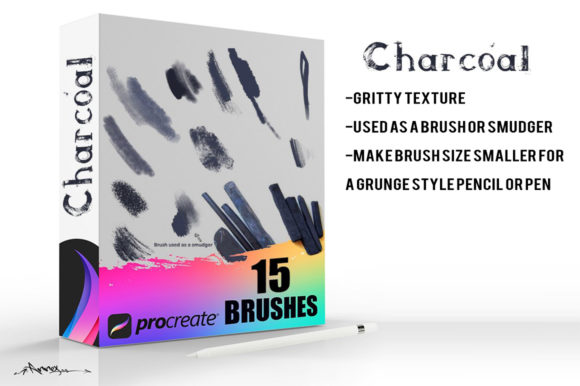
Digital illustration often struggles to replicate the tactile grit and organic imperfection of traditional media. While vector tools offer precision, they frequently lack the soulful texture found in physical sketching. This is where a dedicated set of Charcoal Procreate Brushes becomes an essential asset for serious creators. Specifically, collections featuring 15 solid charcoal style brushes designed for Procreate 4 and up address this gap by simulating the granular behavior of compressed and vine charcoal on paper. These tools are not merely aesthetic overlays; they are functional instruments that alter how an artist interacts with the canvas, offering a bridge between digital convenience and analog warmth.
The primary value proposition of these brushes lies in their ability to mimic the specific physics of charcoal. Unlike standard soft airbrushes or hard ink pens, charcoal possesses a unique grain structure. When evaluating a high-quality set, one looks for variability in stroke opacity based on pressure and tilt, as well as a texture that interacts with the underlying canvas grain. The 15-brush collection in question provides a comprehensive range, from fine liners suitable for initial sketching to broad, side-shading tools ideal for blocking in shadows. This variety ensures that an artist can complete an entire workflow—from concept to final render—without switching to a different toolset.
The Mechanics of Digital Charcoal Simulation
Understanding what makes these brushes effective requires a look at the technical execution within the Procreate engine. A superior charcoal brush does not simply stamp a static image onto the screen. Instead, it utilizes dynamic shaping and grain settings to create a stroke that evolves as the stylus moves. In real-world testing, the "solid" nature of these specific brushes refers to their density and coverage. They avoid the common pitfall of looking too sparse or digitally repetitive.
One standout feature of this particular set is the integration of smudging capabilities. In traditional art, a blending stump or a finger is used to soften edges and create gradients. Digitally, this is often achieved with a separate smudge tool. However, when these Charcoal Procreate Brushes are utilized as smudgers, they retain the textural integrity of the medium. Rather than blurring pixels into a muddy smear, they push the digital "powder" around, maintaining the grainy aesthetic. This results in a more realistic look, allowing for subtle transitions in skin tones or atmospheric backgrounds that feel hand-crafted rather than computer-generated.
The compatibility with Procreate 4 and up is a crucial consideration for professionals managing diverse hardware. Older versions of the software handled brush engines differently, often resulting in lag or inconsistent texture rendering. By optimizing for version 4 and newer, these brushes leverage updated stabilization and grain algorithms. This ensures that the stroke latency is minimal, providing a responsive feel that is critical when working on complex illustrations with thousands of layers.
Practical Applications Across Creative Disciplines
The utility of these brushes extends beyond fine art illustrators. For entrepreneurs and small business owners creating brand assets, the organic feel of charcoal can differentiate a logo or marketing graphic from the sea of polished, corporate vector art. A hand-drawn aesthetic suggests authenticity and human touch, qualities that resonate deeply with modern consumers. Marketers and bloggers can utilize these tools to create custom headers or social media graphics that stand out due to their textured depth.
Educators and content creators also find significant value in this toolset. When explaining concepts through diagrams or quick sketches, the ability to shade rapidly and naturally enhances clarity. The 15 distinct brushes allow for a hierarchy of line weight and tone, making instructional materials more engaging. For freelancers, speed is currency. Having a reliable set of brushes that behave predictably reduces the time spent tweaking settings, allowing more focus on the creative output itself.
In terms of specific workflows, these brushes excel in character design and environment concepting. The capacity to quickly block in dark values with the broader charcoal tips helps artists establish mood and lighting early in the process. The finer brushes allow for detailing hair, fabric textures, or facial features without losing the overarching sketchy vibe. This flexibility supports both loose, expressive styles and tighter, more rendered finishes.
Assessing Quality and Consistency
When integrating new assets into a professional pipeline, consistency is paramount. A frequent complaint with free or low-quality brush packs is the lack of uniformity; one brush might be too wet, another too dry, breaking the visual cohesion of the piece. This set of 15 solid charcoal brushes demonstrates a cohesive design language. The grain size and opacity curves appear calibrated to work together, ensuring that switching between a hatching tool and a shading tool feels intuitive.
Reliability is another key metric. In long drawing sessions, some brushes can cause performance dips if they are overly complex. These brushes strike a balance between high-fidelity texture and efficient processing. They maintain a steady frame rate even on older iPad models, which is a testament to their optimization. For publishers and authors illustrating books, this reliability ensures that the production timeline remains unaffected by technical glitches.
Furthermore, the presentation of the brushes matters. A well-organized library saves mental energy. If the brushes are named logically and grouped by function (e.g., "Sketch," "Shade," "Blend"), the artist's flow state remains uninterrupted. This attention to user experience reflects a deeper understanding of the artist's needs, moving beyond simple functionality to genuine usability.
Limitations and Considerations for Potential Users
While highly effective, it is important to acknowledge that digital charcoal is still a simulation. Purists who require the exact chemical reaction of charcoal on toothy paper may find the digital experience slightly sanitized, regardless of how advanced the algorithm. Additionally, the effectiveness of these brushes relies heavily on the user's hardware. A stylus with poor pressure sensitivity will not fully utilize the dynamic range these brushes offer. Users must also be willing to learn the specific gestures required to get the best out of the smudge functionality, as it differs slightly from physical blending.
There is also a learning curve associated with layer management. Because charcoal textures can be dense, stacking too many layers with high opacity can lead to a muddy appearance. Artists need to adjust their blending modes and layer opacity settings to maintain the crispness of the charcoal grain. This requires a level of digital literacy that goes beyond simply selecting a brush and drawing.
Final Verdict on Long-Term Value
For the demographic of adults aged 20 to 50 who are actively engaged in creative professions, the investment in a specialized toolset like this yields long-term dividends. The versatility of having 15 distinct options means the pack grows with the artist's skill level. A beginner might use them for simple sketches, while a seasoned pro might employ complex layering techniques to achieve photorealistic textures.
The Charcoal Procreate Brushes represent more than just a download; they are a workflow enhancer. They solve the specific problem of sterility in digital art by reintroducing chaos, grain, and unpredictability in a controlled manner. Whether used for drafting a novel's cover, designing a website's hero image, or creating fine art prints, these brushes provide the necessary fidelity to make digital work feel undeniably human. Their compatibility with current software versions and their robust smudging capabilities make them a practical, reliable choice for anyone looking to elevate the textural quality of their digital masterpieces.