Mastering Digital Impasto: A Comprehensive Guide to the Procreate Oil Painting Brush and 36 Oil Brushes Set
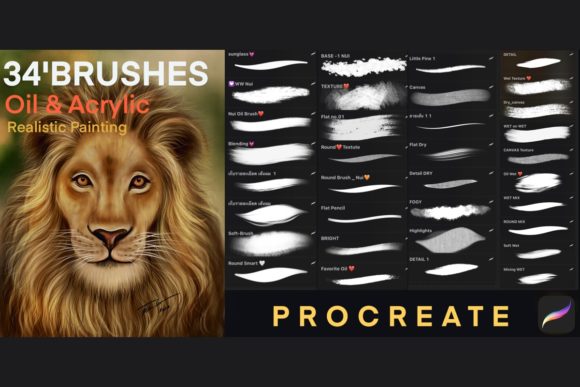
The transition from traditional canvas to digital screens has revolutionized how artists create, yet one texture remains notoriously difficult to replicate digitally: the thick, rich impasto of oil paint. For years, digital art leaned heavily into flat vectors or smooth airbrushed gradients. However, with the advent of advanced texture engines in apps like Procreate, the gap between physical and digital media has nearly closed. At the forefront of this evolution is the Procreate Oil Painting Brush, specifically collections like the comprehensive "36 Oil Brushes" set. These tools are not merely filters; they are sophisticated simulations of bristle behavior, paint viscosity, and canvas tooth, designed to bring the tactile experience of studio painting to the iPad.
The Mechanics of Digital Viscosity
To understand why a dedicated Procreate Oil Painting Brush is essential for serious digital painters, one must look under the hood of how these tools function. Unlike standard drawing tools that lay down uniform color, high-quality oil brush sets utilize complex grain maps and shape dynamics. When you stroke the screen with a tool from the 36 Oil Brushes collection, the software calculates the angle of your Apple Pencil, the speed of your movement, and the pressure applied. This data translates into variable bristle splay, meaning the brush strokes widen, split, or taper just as a hog hair brush would on linen.
The magic lies in the "wetness" simulation. Traditional digital brushes often feel dry and immediate. In contrast, a well-engineered oil brush allows for color blending directly on the canvas. As you drag a new color over an existing layer, the pixels mix rather than simply covering one another. This characteristic is vital for achieving realistic skin tones, atmospheric landscapes, and the subtle gradations found in classical realism. The 36 Oil Brushes set typically includes variations ranging from stiff bristle brushes for heavy impasto work to soft filberts for smooth glazing, providing a complete toolkit for mimicking the physics of real paint.
Bridging the Gap for Beginners and Professionals
A common misconception in the digital art community is that mastering these tools requires years of traditional painting experience. While a background in fine arts certainly helps with color theory and composition, the technical operation of the Procreate Oil Painting Brush is surprisingly accessible. If you are a beginner starting your digital painting journey on Procreate, the learning curve is manageable. The intuitive nature of the Apple Pencil combined with the responsive design of these brushes means you can produce professional-looking textures almost immediately.
For the novice, the advantage is the ability to experiment without waste. In a traditional studio, setting up oils involves solvents, rags, ventilation, and significant cleanup time. Mistakes can be frustrating and costly in terms of materials. With the digital equivalent, a beginner can practice the technique of "scumbling" or "glazing" endlessly, undoing errors with a tap while retaining the muscle memory of genuine brushwork. The 36 Oil Brushes set acts as a training wheel that doesn't feel like one; it provides the resistance and feedback necessary to learn proper stroke control without the mess.
Conversely, for professional illustrators and concept artists, these brushes offer speed and flexibility. A professional can block in a painting with thick, heavy strokes using a palette knife simulation from the set, then switch to a fine liner for details, all within the same file. This workflow eliminates the need to scan traditional paintings for texturing, allowing for a fully non-destructive workflow where layers can be adjusted, colors shifted, and compositions altered long after the "paint" has dried.
Essential Hardware and Software Requirements
To unlock the full potential of these advanced brush engines, specific hardware and software configurations are required. The fluidity of the Procreate Oil Painting Brush relies heavily on the processing power of the device and the precision of the input method. The primary requirement is an iPad Pro or a standard iPad capable of running the latest versions of the operating system. While older models can run Procreate, the nuanced pressure sensitivity and tilt recognition that make oil brushes feel authentic are best experienced on devices equipped with advanced display technology.
The Apple Pencil is non-negotiable for this type of work. Finger painting lacks the precision and pressure variance needed to manipulate the bristle dynamics of the 36 Oil Brushes. The Apple Pencil's ability to detect slight changes in angle allows the brush to rotate naturally, creating chiseled edges or broad sweeps depending on how you hold the stylus. Furthermore, the software foundation is critical. Users must have the Procreate App version 5.0 or higher. Version 5 introduced significant updates to the brush engine, including improved grain rendering and streamline features that stabilize strokes, which are crucial for maintaining the integrity of oil paint textures.
Diverse Applications Across Industries
The utility of the Procreate Oil Painting Brush extends far beyond hobbyist doodling. Its applications span various professional sectors, each leveraging the unique aesthetic of digital oils for different outcomes.
- Fine Art and Gallery Work: Many contemporary digital artists now print their works on canvas with giclée printers. The texture generated by the 36 Oil Brushes is often so convincing that viewers cannot distinguish the piece from a traditional oil painting until they touch the surface. This has opened new revenue streams for artists who can sell limited edition prints without the logistical nightmare of shipping wet canvases.
- Concept Art and Entertainment: In the film and gaming industries, speed is currency. Concept artists use oil brush sets to rapidly paint mood pieces, environment concepts, and character designs. The ability to convey lighting and materiality quickly using impasto techniques helps directors and art directors visualize the final product early in the production pipeline.
- Educational Content: Educators and tutorial creators utilize these brushes to teach art fundamentals. Because the digital medium allows for recording the entire process (via Procreate's time-lapse feature), teachers can demonstrate complex oil painting techniques—such as underpainting and overpainting—and share the playback with students globally.
- Commercial Illustration: Book covers, editorial illustrations, and advertising campaigns increasingly favor the organic look of hand-painted art over sterile vector graphics. The warmth and imperfection provided by the Procreate Oil Painting Brush add a human touch that resonates emotionally with consumers.
Workflow Strategies for Maximum Realism
Achieving a truly convincing oil painting look requires more than just selecting the right brush; it demands a strategic workflow. One effective method is the "layered approach." Start with a textured background layer that mimics primed canvas. This provides the "tooth" that the bristles of the 36 Oil Brushes will catch onto. Without this underlying texture, even the best brushes can look like they are floating on glass.
Next, utilize the opacity and flow settings inherent in the brush set. Do not paint at 100% opacity immediately. Build up colors gradually, much like a traditional painter would. Use the thinner, more transparent brushes in the collection for initial sketches and value studies. As the painting progresses, switch to the heavier, more opaque brushes for highlights and final details. This builds physical depth in the image, simulating the way light interacts with raised paint ridges.
Another crucial consideration is color mixing. While Procreate has a color picker, relying on it too heavily can result in unnatural, overly saturated hues. Instead, use the blending capabilities of the Procreate Oil Painting Brush to mix colors directly on the canvas. Drag a blue into a yellow area and let the brush smudge them together to create a natural green. This technique preserves the chaotic beauty of real pigment mixing, avoiding the sterile perfection of digital gradients.
Overcoming Common Digital Pitfalls
Despite the sophistication of the 36 Oil Brushes, users often fall into the trap of "digital perfection." Because the medium allows for infinite undoing and perfect symmetry, artworks can sometimes lack the soulful irregularities of traditional media. To combat this, artists should intentionally introduce imperfections. Vary the pressure inconsistently, allow stray bristle marks to remain, and avoid over-blending. The charm of oil painting lies in its viscosity and the visible history of the artist's hand movements.
Additionally, screen glare and the slippery nature of glass can disconnect the artist from the sensation of painting on canvas. Many professionals mitigate this by applying a matte screen protector to their iPad. This adds friction, making the Apple Pencil feel more like it is dragging through paint, which significantly enhances the control one has over the Procreate Oil Painting Brush.
The Future of Textured Digital Art
As tablet technology evolves, the line between physical and digital continues to blur. Haptic feedback and advanced pressure sensors promise to make the sensation of using a Procreate Oil Painting Brush even more indistinguishable from the real thing. However, the core of the experience remains rooted in the quality of the brush engine itself. Sets like the 36 Oil Brushes represent the current pinnacle of this technology, offering a robust, versatile, and deeply satisfying creative experience.
Whether you are a seasoned master looking to digitize your workflow, a business owner needing unique branding assets, or a complete beginner eager to explore the world of art, these tools provide the bridge. They democratize the medium of oil painting, removing barriers of cost and space while preserving the integrity and beauty of the craft. By understanding the mechanics, respecting the workflow, and embracing the unique characteristics of digital viscosity, any user can transform their iPad into a portable studio capable of producing timeless, textured masterpieces.