Evaluating the 122 Grunge Art Brushes for Adobe Illustrator
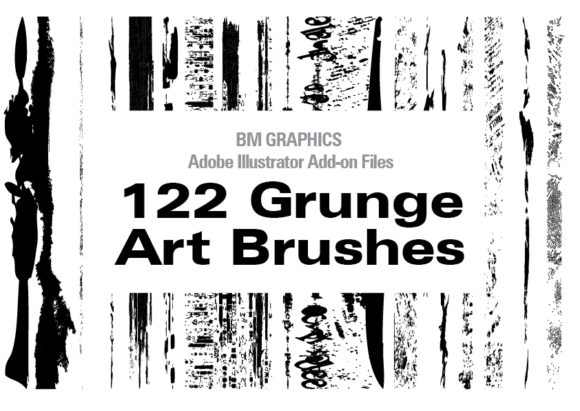
For digital artists and graphic designers working within the Adobe ecosystem, the choice of brush libraries can significantly influence workflow efficiency and the final aesthetic of a project. The 122 Grunge Art Brushes, available exclusively through Creative Fabrica, represent a specialized collection designed to introduce organic imperfection into vector-based work. This set is characterized by its messy, inky, rough, textured, and glitchy qualities, offering a distinct departure from the clean, mathematical precision typically associated with Adobe Illustrator. Understanding the specific attributes, compatibility features, and practical applications of these brushes is essential for designers determining if this asset aligns with their current project requirements.
Defining the Aesthetic and Technical Scope
The core value proposition of the 122 Grunge Art Brushes lies in their ability to simulate traditional media flaws and digital artifacts within a vector environment. Unlike standard vector brushes that often produce smooth, scalable lines, this collection focuses on texture. The "grunge" descriptor here encompasses a range of visual styles: from dried ink splatters and rough charcoal strokes to modern digital glitches and noise patterns. Each of the 122 brushes is crafted to break up solid shapes and lines, adding a layer of complexity that can make digital illustrations feel more tactile and human.
Technically, these brushes are saved as an Adobe CS5 file. This specification is critical for users operating in diverse environments. By maintaining backwards compatibility to CS5, the creator ensures that the brushes function not only in the latest versions of Adobe Illustrator but also in older iterations still used by many studios and freelancers. This broad compatibility reduces the friction of adoption, allowing teams with mixed software versions to utilize the same assets without conversion errors or loss of fidelity.
Reasons for Interest and Practical Benefits
Designers often seek out grunge resources to solve a specific visual problem: the sterility of perfect vectors. When a project demands a raw, edgy, or vintage look, standard tools may fall short. The primary benefit of integrating the 122 Grunge Art Brushes is the immediate injection of character. Instead of spending hours manually creating texture overlays or searching for raster images to blend modes, a designer can apply these brushes directly to paths. This streamlines the texturing process, keeping the workflow entirely within the vector domain.
Furthermore, the fact that these brushes are fully editable is a significant advantage. Because they remain vector-based (or act as art brushes on vector paths), the resulting artwork retains scalability. A user can resize a composition from a business card to a billboard without the pixelation issues common in raster-based grunge textures. This editability extends to the anchor points and stroke profiles, allowing for fine-tuning of the brush shape to suit specific compositional needs. For projects requiring high-resolution output where clarity is paramount, this vector foundation provides a safety net that pure raster textures cannot.
Ideal Use Cases and Strong Fits
Certain design scenarios are particularly well-suited for this type of brush library. The 122 Grunge Art Brushes are a strong fit for:
- Music Industry Graphics: Album covers, concert posters, and merchandise for rock, punk, metal, or indie genres often rely on rough, DIY aesthetics that these inky and glitchy strokes emulate effectively.
- Streetwear and Apparel Design: The fashion industry frequently utilizes distressed graphics for t-shirts and hoodies. The scalability of these vector brushes ensures crisp prints regardless of the garment size.
- Vintage and Retro Branding: Brands aiming for a worn, established, or counter-culture vibe can use these textures to age logos and packaging designs artificially.
- Digital Collage and Mixed Media: Artists combining photography with illustration can use the glitch and ink effects to create seamless transitions between disparate elements, unifying the piece with a consistent textural theme.
In these contexts, the "messy" nature of the brushes is not a drawback but a deliberate stylistic choice that communicates emotion and attitude.
Tradeoffs and Considerations
While the benefits are clear, potential users must also weigh the tradeoffs inherent in using heavy texture brushes. The primary consideration is file performance. Complex art brushes, especially those simulating detailed ink splatters or noise, can increase the computational load on Adobe Illustrator. Applying all 122 brushes extensively in a single document may lead to slower rendering times or lag when manipulating anchor points, particularly on older hardware. Users working on large-scale projects with hundreds of layers should apply these textures judiciously to maintain system responsiveness.
Another factor is the learning curve associated with mastering art brushes. Unlike simple calligraphic brushes, grunge brushes often require experimentation with stroke weight, pressure sensitivity (if using a tablet), and path direction to achieve the desired effect. A stroke that looks perfect in one direction might appear awkward in another due to the asymmetrical nature of grunge textures. Designers accustomed to predictable, symmetrical tools may need time to adapt to the organic unpredictability of this set.
When to Consider Alternatives
Despite their versatility, the 122 Grunge Art Brushes are not a universal solution. There are situations where alternatives may be more appropriate. If a project requires photorealistic texture, such as the specific grain of concrete or the fibrous detail of handmade paper, high-resolution raster scans or specialized photo-texture plugins might yield superior results. Vector brushes, by definition, approximate texture through shapes; they cannot always replicate the infinite randomness of natural materials.
Additionally, for corporate branding projects that demand absolute cleanliness, consistency, and minimalism, grunge brushes are likely unsuitable. In contexts where legibility and professional polish are the highest priorities—such as financial reports, medical infographics, or luxury tech branding—the rough and glitchy aesthetic could undermine the intended message. In these cases, standard geometric brushes or subtle gradient meshes would be a safer, more effective choice.
Making the Decision
Selecting the right toolset ultimately depends on the specific goals of the design project. The 122 Grunge Art Brushes offer a robust solution for designers looking to bridge the gap between digital precision and analog chaos. Their exclusive availability on Creative Fabrica ensures a curated quality, while the CS5 compatibility guarantees accessibility. However, the decision to purchase should be guided by the need for scalability and the specific stylistic direction of upcoming work.
For artists who frequently toggle between clean vector lines and textured finishes, this library serves as a versatile middle ground. It eliminates the need to switch between Illustrator and Photoshop for basic texturing tasks, keeping the creative process fluid. Conversely, for those whose work is strictly minimalist or who prioritize maximum software performance over stylistic flair, the investment may not yield a proportional return. By evaluating the balance between the desire for organic imperfection and the technical constraints of the project, designers can determine if this collection is the right addition to their toolkit.